Healthflow AI Agent

Healthflow AI Agent: Transforming Patient Care

Healthcare is rapidly evolving with the adoption of Artificial Intelligence, IoT devices, and automation. Hospitals, clinics, and healthcare providers are constantly looking for innovative ways to improve patient care, reduce response time, and enhance operational efficiency. This is where the Healthflow AI Agent is redefining the future of connected healthcare.

Healthflow AI Agent is an advanced AI powered monitoring solution designed to deliver continuous monitoring, real time patient insights, intelligent alerts, and secure healthcare management. By combining AI driven analytics with IoT enabled healthcare devices, Healthflow empowers providers to make faster and more accurate clinical decisions.

With an impressive 85% improvement in response time, 90% accuracy rate, and 70% operational efficiency gain, Healthflow AI Agent is helping organizations deliver smarter, faster, and more reliable patient care.

What is Healthflow AI Agent

Healthflow AI Agent is an intelligent healthcare monitoring platform that uses Artificial Intelligence, machine learning, IoT sensors, and automation to continuously track patient health conditions. It enables healthcare professionals to monitor patient vitals in real time while also identifying potential health risks before they become critical.

The platform is designed to create a connected healthcare ecosystem where doctors, caregivers, and patients can stay informed through real time insights, automated alerts, and conversational AI assistance.

By integrating wearable devices, hospital systems, and digital health platforms, Healthflow creates a centralized and efficient environment that improves both patient outcomes and healthcare operations.

Why Modern Healthcare Needs AI Powered Monitoring

Traditional healthcare monitoring systems often rely on manual data collection and delayed responses. This can lead to missed warning signs, slower decision making, and increased operational challenges.

AI powered healthcare systems solve these problems by offering continuous patient monitoring, automated data analysis, and intelligent risk detection. Healthflow AI Agent brings all these capabilities together into a single smart healthcare solution.

Healthcare providers today require:

• Faster response to patient emergencies
• Continuous vital sign monitoring
• Accurate sensor data validation
• Predictive healthcare insights
• Secure patient data management
• Improved communication between patients and caregivers

Healthflow AI Agent addresses these challenges through automation and AI driven healthcare intelligence.

Real Time Health Monitoring for Better Patient Care

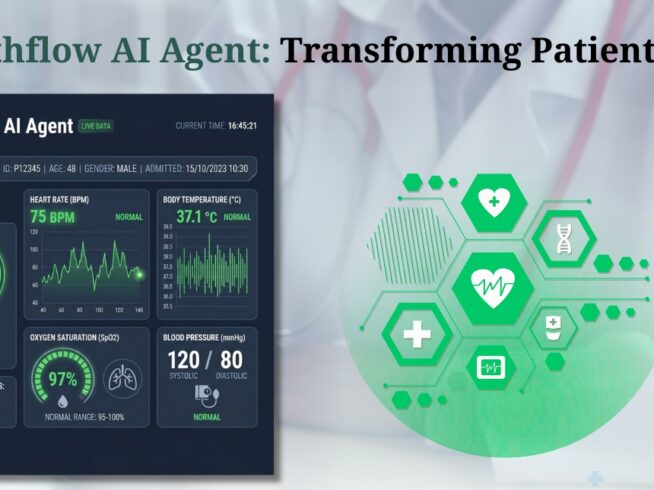
One of the most powerful features of Healthflow AI Agent is its real-time health monitoring capability. The system continuously tracks important patient health metrics such as heart rate, oxygen saturation, body temperature, and other vital signs through IoT enabled sensors.

This continuous monitoring allows healthcare professionals to receive instant updates about a patient’s condition without relying on manual checks. Real time monitoring helps hospitals improve patient care while reducing delays in emergency response.

By constantly analyzing incoming health data, Healthflow ensures that critical changes in patient conditions are identified immediately.

Early Health Risk Detection with AI Intelligence

Healthflow AI Agent uses advanced AI models to identify abnormal patterns in patient health data. The system can detect unusual variations in vital signs and alert healthcare professionals before the situation becomes severe.

This early risk detection capability is especially valuable for patients with chronic illnesses, elderly care, post-surgery recovery, and remote patient monitoring.

The AI powered analytics engine helps doctors make proactive decisions instead of reactive ones. This significantly improves patient outcomes while reducing healthcare risks.

Healthcare providers can respond faster to emergencies because Healthflow delivers intelligent alerts in real time.

Sensor Data Validation for Reliable Insights

Accurate healthcare data is critical for effective treatment decisions. Healthflow AI Agent includes intelligent sensor data validation features that automatically detect inaccurate readings, inconsistent data, or malfunctioning devices.

The system continuously verifies incoming data to ensure healthcare professionals receive reliable and trustworthy information.

Automated data verification minimizes the risk of false alerts and improves confidence in patient monitoring systems. Healthflow achieves a 90% accuracy rate in healthcare monitoring and analytics.

Voice Enabled Health Assistant for Enhanced Accessibility

Healthflow AI Agent includes a voice enabled healthcare assistant that allows patients and caregivers to interact with the system using simple voice commands.

Patients can request health updates, medication reminders, or healthcare information without needing complex technical interactions. This feature improves accessibility for elderly patients and individuals with limited mobility.

Voice enabled healthcare assistance creates a more user friendly and patient focused healthcare experience while improving communication between caregivers and patients.

Conversational AI Chatbot for Patient Support

The integrated conversational AI chatbot provides intelligent support for patient interactions. The chatbot can answer healthcare related questions, provide appointment reminders, assist with medication schedules, and guide patients through basic healthcare information.

This AI powered chatbot improves patient engagement while reducing the workload on healthcare staff.

By automating routine interactions, healthcare providers can focus more on critical patient care activities while ensuring patients continue receiving timely support and assistance.

Continuous Vital Sign Tracking and Connected Care

Healthflow AI Agent offers 24/7 continuous vital sign tracking that keeps patients always connected to healthcare providers.

Whether patients are in hospitals, care facilities, or remote locations, the system ensures uninterrupted monitoring and instant data sharing. Continuous tracking helps doctors maintain better visibility in patient conditions and respond quickly when necessary.

This connected healthcare model improves remote patient care, telemedicine services, and chronic disease management.

Unified Healthcare Dashboard for Smarter Decision Making

Healthcare professionals often struggle with fragmented systems and scattered patient information. Healthflow solves this challenge through a unified healthcare dashboard.

The centralized dashboard provides access to patient vitals, alerts, historical trends, AI generated insights, and healthcare analytics in one place.

Doctors and caregivers can quickly review patient conditions, monitor alerts, and make informed decisions using real time data.

The dashboard improves operational efficiency by simplifying healthcare workflows and reducing administrative complexity.

Secure Data Management and Patient Privacy

Data security and patient privacy are essential in modern healthcare systems. Healthflow AI Agent is built with strong encryption protocols and healthcare compliance standards to protect sensitive patient information.

Secure data management ensures that healthcare providers can safely store, access, and share patient records while maintaining privacy and regulatory compliance.

The platform is designed to support secure healthcare operations without compromising accessibility or efficiency.

AI Powered Health Intelligence for Smarter Healthcare

Healthflow transforms continuous sensor data into actionable healthcare insights using advanced Artificial Intelligence and machine learning models.

The AI engine identifies health trends, predicts potential risks, and generates meaningful analytics that support faster and more accurate clinical decisions.

This intelligent healthcare approach helps medical professionals improve diagnoses, treatment planning, and patient management strategies.

AI powered health intelligence is becoming a critical component of modern healthcare transformation, and Healthflow AI Agent is leading this innovation.

Building a Connected Healthcare Ecosystem

Healthflow seamlessly integrates with IoT healthcare devices, wearable trackers, hospital systems, and digital healthcare platforms.

This connected ecosystem creates a unified patient monitoring environment where data flows securely and efficiently across healthcare networks.

By connecting devices and healthcare systems, Healthflow improves communication, coordination, and patient care management.

Healthcare organizations can leverage this connectivity to deliver smarter healthcare experiences and improve overall operational performance.

The Future of Intelligent Healthcare

Artificial Intelligence is transforming the healthcare industry by improving efficiency, enhancing patient care, and enabling data driven medical decisions.

Healthflow AI Agent represents the future of intelligent healthcare monitoring with its combination of AI analytics, real time monitoring, predictive healthcare insights, and secure healthcare management.

As healthcare providers continue adopting digital transformation strategies, solutions like Healthflow AI Agent will play a vital role in delivering faster, safer, and more personalized patient care.

Organizations that embrace AI powered healthcare technologies today will be better prepared to meet the growing demands of modern healthcare for tomorrow.

Conclusion

Healthflow AI Agent is more than just a healthcare monitoring solution. It is a complete AI powered healthcare ecosystem designed to improve patient safety, optimize clinical workflows, and enhance healthcare decision making.

With real time monitoring, intelligent risk detection, voice enabled assistance, conversational AI support, secure data management, and advanced analytics, Healthflow empowers healthcare organizations to deliver smarter and more connected patient care.

By achieving significant improvements in response time, operational efficiency, and monitoring accuracy, Healthflow AI Agent is helping healthcare providers build the future of intelligent healthcare.

AI Agents in Healthcare Reducing Costs and Improving Patient Outcomes.

AI Agents in Healthcare: Reducing Costs and Improving Patient Outcomes

The healthcare industry is under immense pressure. Rising operational costs, staff shortages, and an ever-increasing demand for high-quality care have made it clear that traditional healthcare procedures are not sustainable. 

To survive and thrive in this new era, healthcare providers must look toward smarter, technology-driven solutions.

One innovation leading the charge is AI agents, an intelligent digital assistant that do not just automate tasks, but also learn, adapt, and support doctors, nurses, administrators, and patients. 

From reducing healthcare costs to improving patient outcomes, AI agents are shaping the future of healthcare delivery.


What Are AI Agents in Healthcare?

AI agents are intelligent software systems that are designed to assist, automate, and enhance various aspects of healthcare. They combine machine learning, natural language processing (NLP), computer vision, predictive analytics, and automation to support healthcare professionals.

In healthcare, AI agents can:

  • Communicate with patients via chat or voice.
  • Analyze patient data to detect health risks.
  • Automate repetitive back-office tasks like billing and scheduling.
  • Support clinical decision-making by providing insights.
  • Accelerate drug development process by optimizing clinical trials.
  • Offer continuous remote monitoring and telemedicine.
  • Summarize and extract valuable information from medical data.

AI agents use artificial intelligence techniques to make decisions and take actions to achieve goals. They adapt, learn from patterns, and improve over time. Think of them as virtual colleagues who can take on routine workloads so healthcare professionals can focus on critical, high-value tasks.

Why Healthcare Costs Keep Rising

Before we look at how AI agents help, let us understand the challenge. 

Healthcare costs are rising due to several factors:

  • Administrative overload – Around 30% of U.S. healthcare spending goes into administrative processes like claims, billing, and paperwork.
  • Workforce shortages – Hospitals and clinics worldwide are facing a shortage of doctors, nurses, and support staff.
  • Chronic disease management – Diabetes, cardiovascular diseases, and cancer require continuous monitoring, making treatment expensive.
  • Inefficient resource utilization – From unoccupied beds to redundant tests, inefficiencies drive up costs.
  • Medical errors – Mistakes in diagnosis, prescriptions, or procedures lead to financial and human costs.

AI agents address these pain points directly by cutting inefficiencies, reducing errors, and ensuring better allocation of resources.


How AI Agents Reduce Healthcare Costs

Benefits of AI Agents and their significant impact are seen across various sectors of healthcare industry. 

1. Automating Administrative Tasks

Administrative work eats up both time and money. AI agents can manage:

  • Appointment booking and rescheduling.
  • Insurance verification and claims processing.
  • Billing and payment reminders.

By reducing manual workloads, healthcare organizations save on staffing costs and minimize costly human errors.

2. Optimizing Resource Utilization

Hospitals often struggle with capacity planning. AI agents use predictive analytics to:

  • Forecast patient admission rates.
  • Manage bed occupancy efficiently.
  • Track and schedule use of critical equipment.

This ensures no resource goes underutilized while avoiding overbooking or shortages.

3. Preventing Readmissions

Hospital readmissions are costly and often avoidable. AI agents help by:

  • Monitoring discharged patients remotely.
  • Sending medication and appointment reminders.
  • Alerting providers if a patient’s condition worsens.

This proactive approach reduces unnecessary hospital stays and saves significant costs.

4. Speeding Up Clinical Decision-Making

Doctors are often burdened with large amounts of patient data. AI agents can:

  • Aggregate lab results, imaging reports, and EHR data.
  • Highlight risk factors or anomalies.
  • Suggest treatment options based on similar cases.

This accelerates decision-making and prevents unnecessary diagnostic tests.

5. Improved Diagnosis Accuracy

Healthcare systems generate a vast amount of diverse and complex data. AI agents can:

  • Design personalized treatment plan.
  • Provide data-driven insights for healthcare management.
  • Integrate genetic data for effective treatment.

This reduces the likelihood of costly diagnostics errors leading to accurate treatment.

How AI Agents Improve Patient Outcomes

AI agents enhance the quality of patient care.

1. Personalized Patient Care

Every patient is unique. AI agents analyze patient history, lifestyle, and genetic factors to:

  • Provide tailored treatment plans.
  • Offer lifestyle recommendations.
  • Adjust care plans dynamically as new data comes in.

This ensures that patients receive individualized care, not one-size-fits-all solutions.

2. 24/7 Virtual Health Assistance

Imagine a patient feeling unwell at midnight. Instead of waiting for clinic hours, AI-powered chatbots and voice assistants can:

  • Answer medical queries.
  • Guide patients on whether to seek urgent care or manage symptoms at home.
  • Provide emotional reassurance.

This round-the-clock availability improves patient satisfaction and reduces unnecessary ER visits.

3. Remote Patient Monitoring (RPM)

Wearables and IoT devices paired with AI agents allow real-time health monitoring. For example:

  • A diabetic patient’s glucose levels can be tracked continuously.
  • Cardiac patients can have heart rate and ECG monitored remotely.
  • Alerts are sent instantly to caregivers in case of anomalies.

This improves outcomes by ensuring early intervention.

4. Reducing Medical Errors

AI agents act as a second set of eyes for healthcare professionals by:

  • Cross-checking prescriptions to avoid harmful drug interactions.
  • Flagging inconsistent diagnoses.
  • Ensuring adherence to treatment protocols.

With fewer errors, patient safety and trust in healthcare systems improve significantly.

5. Streamline Hospital Operations

AI agents can optimize hospital resources (e.g., beds, staff, medicine, equipment) based on real time data.

  • Predictive models can forecast patient inflow.
  • Efficient resource allocation to avoid bottlenecks.
  • Automating administrative tasks to improve operational efficiency. 

This makes healthcare more efficient, personalized, and accessible.

Real-World Examples of AI Agents in Healthcare

  • Mayo Clinic: Uses AI-powered scheduling systems to reduce wait times and improve staff efficiency.
  • Babylon Health: Offers an AI chatbot that triages symptoms and directs patients to the appropriate care level.
  • Philips Healthcare: Employs AI-driven remote monitoring to support chronic disease management.
  • Johns Hopkins: Leverages AI tools for predicting patient deterioration in ICUs.
  • Morgan Health: Uses AI to analyze claims and benefits data to improve health program performance.

These examples showcase how AI agents are playing a vital role in healthcare industry.

Challenges to Overcome

Despite their promise, AI agents in healthcare face hurdles:

  1. Data Privacy and Security

Handling patient data requires strict compliance with HIPAA and GDPR regulations.

  1. Integration with Legacy Systems

Many hospitals use outdated IT systems, making integration a challenge.

  1. Patient Trust
    Some patients feel uneasy about receiving recommendations from AI instead of doctors.
  2. Cost of Implementation
    Deploying AI systems requires upfront investment, though long-term ROI is positive.
  3. Bias and Fairness
    AI models can inherit and even amplify existing biases in training data.
  4. Lack of Explainability
    Many AI systems (especially deep learning models) do not provide transparent reasoning behind decisions.

Addressing these concerns requires careful planning, training, and transparent communication with patients and staff.


The Future of AI Agents in Healthcare

The future of healthcare is smarter, faster, and more personalized. Here is what to expect:

  • Virtual Nursing Assistants – AI agents will guide patients throughout recovery, reminding them of medication schedules and physical therapy exercises.
  • Surgeries – Clinical teams will use AI agents during surgeries.
  • Early Disease Detection – By analyzing subtle patterns in health data, AI agents may spot diseases before symptoms even appear.
  • Public Health Surveillance – AI agents will help track and manage diseases at community and global level.
  • Consumer Tech – AI agents will increasingly live in smartphones, wearables and home devices becoming part of daily life.
  • Fully Integrated EHR Systems – Doctors will receive real-time recommendations as AI agents analyze medical records instantly.
  • Scalable Telemedicine Support – AI agents will make remote healthcare more accessible and affordable, especially in underserved regions.

The next decade AI agents will become a critical force behind every diagnosis, treatment, and patient interaction.

Final Thoughts

AI agents are already reshaping the future of healthcare not as replacements for healthcare professionals, but as a powerful ally that enhances the efficiency, precision, and reach of medical services. 

By cutting down on unnecessary costs and enhancing patient care, they provide a much-needed solution for industry, under immense strain.

AI agents will make healthcare providers more effective, more informed, and more empowered.

The organizations that embrace AI agents thoughtfully and responsibly will provide healthcare that is efficient, affordable, and patient-centered.

Software for healthcare

Tailored Software Solutions for the Healthcare Sector: Key Features & Benefits

In an age of digital transformation, the healthcare industry stands at the forefront of innovation. From electronic medical records to AI-powered diagnostics, technology is reshaping patient care and operational efficiency. For healthcare providers, investing in tailored software solutions is not just a trend — it is a necessity.

Here are the key features and benefits of custom software solutions for the healthcare sector, and why personalized development is the right choice over off-the-shelf products.