
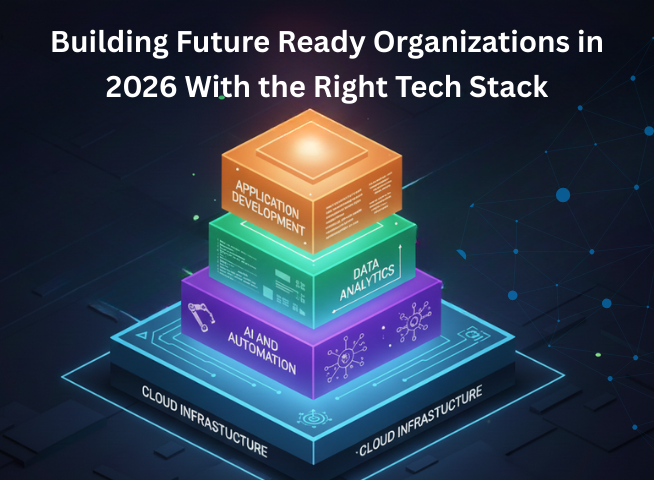
As we move into 2026, organizations across industries are facing a reality that is impossible to ignore. Technology is no longer just a support function. It has become the backbone of business growth, resilience, and innovation. Companies that once relied on traditional systems are now realizing that outdated tools slow down decision making, increase costs, and limit scalability.
Building a future ready organization in 2026 is not about chasing trends. It is about choosing the right technology stack that aligns with business goals, supports people, and adapts to change. The right tech stack empowers teams, improves customer experience, and prepares businesses to manage uncertainty with confidence.
In this blog, we explore what it truly means to be future ready, why your tech stack matters more than ever, and how organizations can build a strong foundation for long term success.
What Does Future Ready Mean in 2026
A future ready organization is one that can adapt quickly, scale efficiently, and innovate continuously without disrupting its core operations. In 2026, this readiness is defined by flexibility, data driven decision making, automation, and seamless collaboration across teams.
Future ready companies do not wait for disruption to act. They anticipate changes in customer expectations, regulations, and market conditions. They invest in technology that allows them to pivot faster while maintaining stability.
Being future ready also means creating systems that support both growth and resilience. Whether it is entering new markets, launching digital products, or responding to global challenges, technology plays a central role.
Why the Right Tech Stack is a Strategic Advantage
Your tech stack is more than a collection of tools. It is the engine that drives your business operations. In 2026, organizations with a well-planned tech stack outperform those that rely on fragmented or outdated systems.
A strong tech stack enables faster innovation by reducing development time and improving integration between systems. It improves operational efficiency by automating repetitive tasks and minimizing manual errors. It also enhances employee productivity by providing intuitive and reliable tools.
Most importantly, the right tech stack supports better decision making. With real time data and advanced analytics, leaders can respond quickly to opportunities and risks.
Core Components of a Future Ready Tech Stack
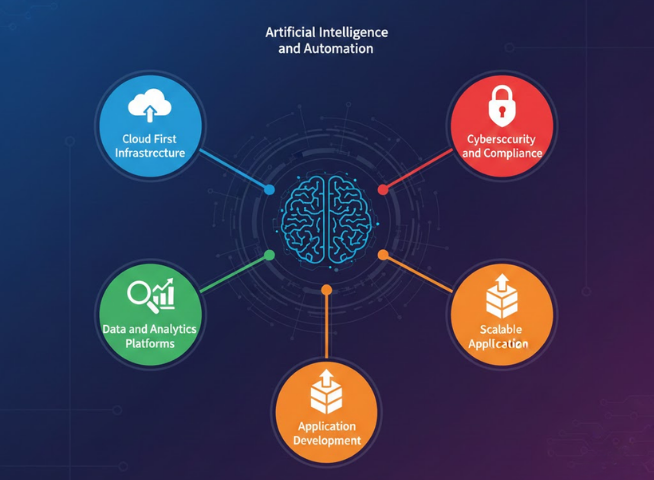
While every organization has unique needs, future ready tech stacks in 2026 share several common components. These technologies work together to create agility, scalability, and intelligence.
1. Cloud First Infrastructure
Cloud computing continues to be the foundation of modern organizations. A cloud first approach allows businesses to scale resources on demand, reduce infrastructure costs, and improve system reliability.
In 2026, cloud platforms support everything from application development to advanced analytics and artificial intelligence. They also enable global collaboration by providing secure access from anywhere.
Organizations that invest in cloud native architecture gain the flexibility to experiment, innovate, and grow without being limited by physical infrastructure.
2. Data and Analytics Platforms
Data is the most valuable asset for future ready organizations. However, data alone is not enough. Businesses need the ability to collect, process, and analyze data in real time.
Modern analytics platforms help organizations uncover insights from customer behavior, operational performance, and market trends. These insights drive smarter strategies and more personalized experiences.
In 2026, organizations that treat data as a strategic asset gain a significant competitive edge.
3. Artificial Intelligence and Automation
Artificial intelligence is no longer optional. It is a key driver of efficiency and innovation. From customer support chatbots to predictive analytics and intelligent workflows, AI helps organizations do more with less.
Automation reduces manual work and allows employees to focus on higher value tasks. It also improves accuracy and consistency across processes.
Future ready organizations use AI responsibly and strategically to enhance human capabilities rather than replace them.
4. Scalable Application Development
The ability to build and update applications quickly is critical in a fast-changing environment. Modern development frameworks, low code platforms, and microservices architectures support rapid innovation.
In 2026, organizations prioritize scalable and modular applications that can evolve with business needs. This approach reduces technical debt and ensures long term sustainability.
5. Cybersecurity and Compliance
As digital systems expand, so do security risks. Future ready organizations embed security into every layer of their tech stack.
Advanced cybersecurity tools protect data, applications, and infrastructure from evolving threats. Compliance solutions help organizations meet regulatory requirements without slowing down operations.
In 2026, trust and security are essential to maintaining customer confidence and business continuity.
Aligning Technology with Business Goals
One of the most common mistakes organizations make is investing in technology without a clear strategy. A future ready tech stack must align with business objectives and support long term vision.
Technology leaders and business leaders must work together to identify priorities. Whether the goal is improving customer experience, increasing efficiency, or enabling innovation, every technology decision should support that goal.
Regular reviews and performance metrics help ensure that the tech stack continues to deliver value as the organization grows.
Building a Culture That Supports Technology Adoption
Even the best technology fails without people who know how to use it effectively. Future ready organizations invest in building a culture of learning and adaptability.
Training programs, clear communication, and employee involvement are essential for successful technology adoption. When teams understand the purpose behind new tools, they are more likely to embrace change.
In 2026, organizations that prioritize people alongside technology create stronger and more sustainable transformations.
Avoiding Common Tech Stack Pitfalls
While building a future ready tech stack, organizations must be mindful of common challenges. Over customization can lead to complexity and maintenance issues. Relying on too many disconnected tools creates inefficiencies and data silos.
Another common issue is short term thinking. Choosing tools based solely on current needs can limit scalability and flexibility in the future.
Future ready organizations take a long-term perspective and prioritize simplicity, integration, and adaptability.
The Role of Trusted Technology Partners
Navigating the technology landscape can be overwhelming. Trusted technology partners play a crucial role in helping organizations design and implement the right tech stack.
Experienced partners bring industry expertise, technical depth, and strategic insight. They help organizations choose solutions that align with both current needs and future goals.
In 2026, successful organizations collaborate with partners who understand their business and can support continuous evolution.
Preparing for What Comes Next
The pace of change will not slow down. New technologies, regulations, and customer expectations will continue to shape the business landscape.
Future-read organizations accept uncertainty as a constant and prepare for it through flexible systems and informed decision making. The right tech stack provides the foundation for resilience and innovation.
By investing in scalable platforms, data driven insights, and intelligent automation, organizations position themselves to thrive in 2026 and beyond.
Conclusion
Building a future ready organization in 2026 is not about having the most tools. It is about having the right ones working together with a clear purpose. A well-designed tech stack empowers people, supports growth, and enables continuous innovation.
Organizations that take a strategic approach to technology today will be better prepared for the challenges and opportunities of tomorrow. With the right foundation in place, the future becomes something to lead.