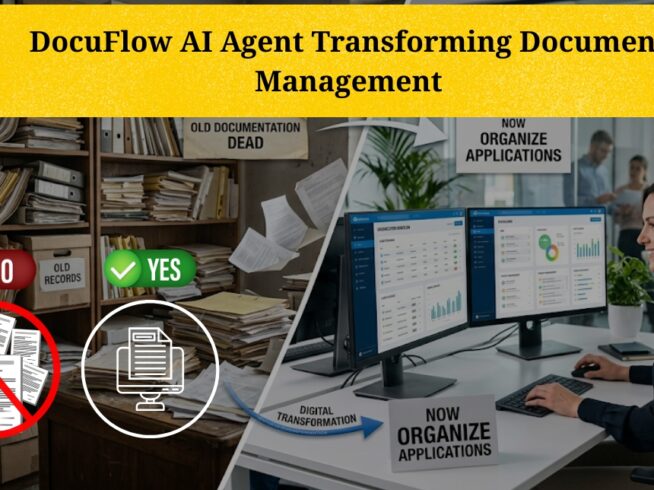
DocuFlow AI Agent: Intelligent Document Automation Solution

In the fast-moving transportation and logistics industry, managing operational documents efficiently is critical for smooth business operations. Every shipment, delivery, and transaction generates important paperwork that must be processed accurately and stored securely. From invoices and bills of lading to permits and proof of delivery documents, logistics companies manage thousands of files daily. Manual document handling not only consumes valuable time but also increases the risk of errors, delays, and misplaced information.

This is where DocuFlow AI Agent becomes a game changing solution. Designed specifically for transportation and logistics companies, DocuFlow AI Agent uses artificial intelligence and advanced document recognition technologies to automate document classification, organization, and processing. 

By streamlining document workflows, logistics businesses can 

  • improve efficiency.
  • reduce operational costs.
  • enhance customer satisfaction.

What is DocuFlow AI Agent?

DocuFlow AI Agent is an intelligent document automation solution built to simplify document management in transportation and logistics operations. The platform automatically identifies, classifies, and organizes transportation related documents into structured categories without requiring manual intervention.

The AI agent combines advanced Optical Character Recognition technology with machine learning models to analyze both digital and scanned documents. This allows companies to process large volumes of paperwork quickly while maintaining high levels of accuracy and compliance.

With an impressive 96 percent customer satisfaction score, 85 percent first contact resolution rate, and 60 percent average handling time reduction, DocuFlow AI Agent is helping logistics companies modernize their document management processes.

Transportation vs Logistics

Transportation is the physical movement of goods or people from one location to another. Logistics is the broader, strategic management process that plans, coordinates, and oversees how resources are stored, handled, and transported.

Transportation focuses on route optimization, fuel efficiency, driver management, and driver speed. While Logistics focuses on overarching strategy, encompassing warehousing, inventory management, packing, order fulfillment, and supply chain coordination.

Both logistics and transportation are critical for effective logistics operations, but their emphasis varies based on operational scope.

Why DocuFlow is needed?

Transportation and logistics companies operate in a document intensive environment. Every stage of the supply chain involves important paperwork that must be processed correctly and stored for future reference.

Traditional document management methods often create several operational challenges, including:

  • Manual document sorting and filing
  • Time consuming data entry processes
  • Difficulty locating important records quickly.
  • High risk of human errors and duplicate entries
  • Delays in invoice approvals and shipment processing
  • Increased administrative workload for employees.

As logistics operations continue to grow, these challenges can significantly impact productivity and customer service. DocuFlow, an AI powered document automation solution, eliminates these inefficiencies by automating repetitive tasks and improving document accessibility.

  1. Automatic Document Classification

One of the most powerful capabilities of DocuFlow AI Agent is automatic document classification. Using advanced AI models, the platform can instantly recognize and categorize transportation related documents without human involvement.

Whether it is an invoice, bill of lading, shipping manifest, permit, or proof of delivery document, the AI agent accurately identifies the document type and organizes it into the appropriate category.

This automation reduces manual workload for logistics teams and ensures documents are stored consistently across the organization.

  1. Multi Document Type Support

Transportation companies deal with a wide range of document formats and types every day. DocuFlow AI Agent is designed to support multiple logistics document categories, making it a flexible and scalable solution for businesses of all sizes.

The platform can process:

  • Invoices
  • Bills of lading
  • Proof of delivery documents
  • Transportation permits
  • Shipping records
  • Operational paperwork
  • Custom logistics forms

By supporting multiple document types, the AI agent enables organizations to centralize document management and streamline workflows across departments.

  1. OCR Technology

Many logistics businesses still rely on scanned paperwork and physical documents. Manually extracting information from these files can be slow and error prone.

DocuFlow AI Agent includes integrated OCR technology that converts scanned images and PDF files into searchable and editable data. The AI system extracts critical information from documents and automatically classifies the content for easy retrieval.

This feature helps organizations digitize paper-based processes while improving data accuracy and operational efficiency.

  1. Intelligent Document Categorization

Efficient document organization is essential for logistics operations. Searching through unstructured folders and scattered files wastes valuable time and slows decision making.

DocuFlow AI Agent automatically organizes documents based on category, type, and operational purpose. AI driven categorization ensures that files are stored in structured locations where employees can quickly access the information they need.

This intelligent organization system improves productivity and supports faster response times across logistics workflows.

  1. Fast Document Processing

Transportation and logistics companies often process thousands of documents daily. Traditional manual methods struggle to keep up with high document volumes, especially during peak operational periods.

DocuFlow AI Agent is built for high-speed document processing. The AI powered platform can analyze, classify, and organize large quantities of documents in significantly less time compared to manual operations.

By reducing document handling time, logistics companies can improve operational performance, accelerate approvals, and minimize delays across the supply chain.

  1. Structured Document Storage

One of the biggest challenges in logistics document management is locating important records quickly when needed. Missing or poorly organized documents can lead to operational disruptions and compliance risks.

DocuFlow AI Agent automatically stores documents in structured folders and categorized repositories. Employees can easily search and retrieve files using keywords, document types, or operational references.

This structured storage approach improves visibility, simplifies audits, and enhances overall information management.

  1. Seamless Integration

Modern transportation companies rely on multiple digital platforms to manage operations. DocuFlow AI Agent integrates seamlessly with existing logistics systems, enterprise applications, and workflow management platforms.

The AI solution enables automated document processing across departments without disrupting current business operations. This integration capability helps organizations modernize their workflows while maintaining operational continuity.

Benefits of Implementing DocuFlow AI Agent

Implementing DocuFlow AI Agent offers several advantages for transportation and logistics companies.

  • Improved operational efficiency through automation.
  • Reduced manual document handling workload.
  • Faster document processing and retrieval
  • Enhanced data accuracy and compliance
  • Better document organization and visibility
  • Scalable solution for growing logistics operations
  • Increased customer satisfaction through faster service delivery

By automating document intensive processes, businesses can focus more on strategic operations and customer service rather than administrative tasks.

The Future of AI-Driven Document Management

Artificial intelligence is rapidly transforming the transportation and logistics industry. As supply chains become more complex, companies need smarter solutions to manage operational data and documentation efficiently.

AI powered platforms like DocuFlow AI Agent are helping logistics businesses move toward faster, more accurate, and fully digital document workflows. From intelligent document recognition to automated categorization and OCR powered processing, AI is redefining how transportation companies manage critical paperwork.

Organizations that adopt intelligent automation solutions today will be better positioned to improve operational agility, reduce costs, and stay competitive in the evolving logistics landscape.

AI Agents in Transportation

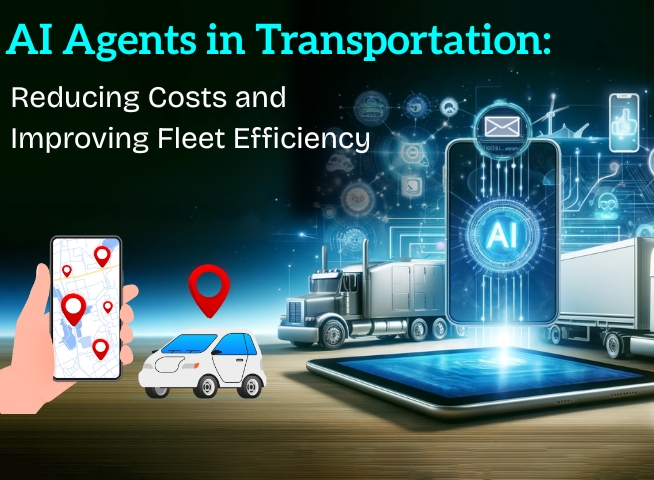
AI Agents in Transportation: Reducing Costs and Improving Fleet Efficiency

The transportation industry is the backbone of global trade and commerce. From moving goods across continents to managing city logistics, transportation directly impacts profitability, customer satisfaction, and sustainability. 

Fleet operators and logistics managers face constant challenges. They aim to lower costs and improve fleet efficiency to achieve on-time delivery. AI agents are reshaping the transportation industry by reducing costs and building smarter fleets for the future.

What Are AI Agents in Transportation?

AI agents are software programs powered by artificial intelligence that autonomously perform tasks, make decisions, and solve problems on behalf of fleet managers, drivers, or logistics companies.

Unlike traditional automation tools, AI agents learn continuously, adapt to changing conditions, and make intelligent decisions.

They act like digital assistants or co-pilots that can analyze data, learn from patterns, predict outcomes, and optimize operations across the entire transportation value chain.

Key Characteristics:

  • Autonomous: Operate without constant human input.
  • Data-Driven: Use sensor data, GPS, traffic info, weather, and historical trends.
  • Adaptive: Learn and adjust their behavior based on changing conditions.
  • Goal-Oriented: Focus on specific tasks like routing, maintenance, scheduling, or safety.

Transportation AI agents can:

  • Monitor fleet health in real time.
  • Automate route planning and scheduling.
  • Predict fuel usage and maintenance needs.
  • Communicate with drivers for safety and compliance.
  • Provide actionable insights to fleet managers.

Think of them as virtual fleet managers, working around the clock to ensure vehicles are used efficiently and operations run smoothly.

Why Transportation Costs Keep Rising

Transportation costs keep rising due to a combination of structural, economic, and environmental factors, many of which are interconnected.

  • Fuel Expenses – Fuel can account for up to 30–40% of fleet operating costs.
  • Maintenance Costs – Unplanned breakdowns, inefficient servicing adds to expenses.
  • Driver Shortages – Recruiting and retaining drivers is costly.
  • Inefficient Routes – Traffic, weather, and poor planning waste fuel and time.
  • Compliance – Regulatory fines, accidents, and insurance premiums increase costs.
  • Inflation – Equipment costs is increasing, especially with advanced vehicles.
  • Faster Delivery – High demand for same day delivery is expensive in crowded cities.
  • Environmental Pressures – Investing in green fleets and electric vehicles are costly.
  • Digitization – Administrative costs of manual or legacy system require investment. 

AI agents directly address these problems by optimizing routes, predicting breakdowns, and improving driver performance for faster, more reliable delivery.

How AI Agents Reduce Transportation Costs

AI agents are actively helping transportation companies tackle rising costs by attacking key cost drivers systematically and intelligently.

1. Fuel Optimization

AI agents analyze historical fuel usage, driving patterns, and route data to:

  • Recommend the most fuel-efficient routes.
  • Detect idling and aggressive driving that waste fuel.
  • Suggest vehicle-specific fuel-saving measures.

By cutting fuel waste, companies save thousands of dollars annually per vehicle.

2. Predictive Maintenance

Instead of waiting for breakdowns, AI agents use real-time vehicle sensor data to:

  • Predict when a part will fail.
  • Schedule proactive maintenance.
  • Minimize downtime and avoid costly emergency repairs.

This predictive approach increases vehicle lifespan and reduces unexpected expenses.

3. Smarter Route Planning

AI-powered route optimization considers traffic, weather, delivery windows, and road conditions to provide drivers with the best possible routes. Benefits include:

  • Reduced delivery delays.
  • Lower fuel consumption.
  • More deliveries per shift.

4. Automated Compliance and Safety Monitoring

AI agents monitor driver behavior, vehicle health, and compliance data to:

  • Ensure adherence to regulations (like Hours of Service).
  • Alert managers about unsafe driving habits.
  • Reduce accident risks and insurance claims.

5. Workforce Efficiency

AI agents automate back-office tasks such as:

  • Dispatching vehicles.
  • Managing driver schedules.
  • Handling customer communication.

This lowers administrative costs and allows staff to focus on higher-value tasks.

What AI Agents Bring to Transportation Cost Reduction

BenefitHow
Data-Driven DecisionsAI makes decisions faster and more accurately than humans.
Real-Time OptimizationResponds instantly to changing conditions.
Predictive PowerAnticipates issues before they become expensive.
AutomationCuts labor costs by automating repetitive and manual tasks.

How AI Agents Improve Fleet Efficiency

AI agents can dramatically improve fleet efficiency by making smarter, faster, and more adaptive decisions than traditional systems or manual operations.

1. Real-Time Fleet Visibility

AI dashboards provide fleet managers with a live view of all vehicles. Managers can see:

  • Which vehicles are on schedule.
  • Where delays are happening.
  • How drivers are performing.

This transparency helps in making instant decisions to improve efficiency.

2. Better Driver Performance

AI agents analyze telematics data to evaluate driver behavior. They:

  • Flag speeding, harsh braking, or idling.
  • Provide personalized coaching to drivers.
  • Incentivize safe and fuel-efficient driving habits.

Over time, fleets run smoother and safer.

3. Reduced Delivery Times

AI agents can dynamically adjust logistics. They:

  • Adjust schedules.
  • Reroute vehicles during disruptions.
  • Reduce bottlenecks or manual errors.

This ensures deliveries are always on time, even when unexpected events occur.

4. Enhanced Customer Experience

AI agents can interact directly with customers by providing:

  • Real-time tracking of shipments.
  • Automated notifications for delays or arrivals.
  • Personalized delivery updates.

When customers stay informed, satisfaction and trust increase.

Examples of AI Agent Tools in Fleet Management:

ToolWhat it Does
AI Routing EngineRe-routes based on real-time data
Maintenance AgentPredicts service needs & schedules downtime
Dispatch BotAuto-assigns drivers based on availability & rules
Driver Scorecard AIScores and coaches driving behavior
Fuel Optimization AgentTracks fuel efficiency and reduce waste

Real-World Results

Companies using AI Agent in Fleet Management have reported:

  • 15–25% reduction in fuel costs
  • 20–30% fewer late deliveries
  • 10–20% increase in asset utilization
  • 30–50% fewer manual dispatching hours

Real-World Examples of AI in Transportation

AI Agents are currently used in transportation, spanning road, rail, maritime, public transit, and infrastructure. 

  • UPS: Uses AI route optimization (“ORION”) to save millions of gallons of fuel annually.
  • DHL: Employs AI-powered predictive analytics to improve supply chain visibility.
  • Tesla: Integrates AI agents in vehicles for autonomous navigation & fleet data analysis.
  • FedEx: Uses AI systems for predictive package routing and delivery optimization.
  • Waymo: Offers driverless (autonomous) taxis to improve accessibility. 

These examples show that AI Agents are already improving cost efficiency and service quality across transportation sector.

Challenges to Implementing AI Agents in Transportation

Implementing AI agents in transportation offers powerful efficiency gains but it comes with real-world challenges that companies must navigate carefully. 

Here are the key challenges:

  1. High Initial Cost – Installing AI-powered telematics, analytics tools require investment.
  2. Data Integration – Many fleets use legacy systems that are not AI-friendly.
  3. Driver Adoption – Some drivers may resist AI-based monitoring.
  4. Cybersecurity Risks – Connected data, which must be protected from breaches.
  5. Data Quality – Incomplete or inconsistent data leads to poor decisions.
  6. Regulatory Concerns – Legal restrictions on data use, liability, safety protocols.
CategoryChallenge
DataPoor quality, siloed, or outdated data
TechnicalLegacy systems, cybersecurity, model drift
OperationalChange resistance, unclear ROI, integration effort
LegalRegulation, liability, privacy
HumanTrust, skills gap, job disruption

However, the long-term ROI through cost savings, improved safety, and efficiency often outweighs the initial challenges.

The Future of AI Agents in Transportation

The future of AI agents in transportation looks incredibly promising and transformative. It will reshape how goods and people move worldwide.

  • Autonomous Fleets – AI agents managing entire self-driving vehicle fleets for logistics.
  • Green Transportation – Optimizing EV fleets by predicting charging needs and minimizing downtime.
  • AI-Powered Supply Chains – End-to-end logistics visibility and decision-making powered by intelligent agents.
  • Dynamic Pricing & Load Matching – AI agents will optimize freight pricing and match loads with available capacity in real time.
  • Predicitive & Prescriptive Analytics – Will predict disruptions. Also recommend or automatically execute contingency plans.

Transportation will be autonomous, connected, predictive, sustainable, and collaborative.

Final Thoughts

AI agents are not just about technological upgrade or automation; they represent a fundamental shift in how fleets are managed. By cutting unnecessary expenses, reducing downtime, and enhancing operational visibility, they enable transportation companies to stay agile, resilient, and competitive in a challenging market.

Their ability to process vast amounts of real-time data, make predictive decisions, automate complex workflows, drive efficiency, safety, and sustainability are game changer.

They are catalysts transforming transportation from reactive and manual operations to proactive, intelligent, and autonomous systems.

Voice AI Agent

Voice AI – Hands-Free Technology Revolutionizing Healthcare

What is Voice AI?

Voice AI refers to artificial intelligence systems powered by natural language processing (NLP) that enable users to interact using spoken commands. Unlike basic voice recognition tools, Voice AI can understand context, intent, and even nuances in speech, making it ideal for environments where accuracy and clarity are vital.

Voice AI has a wide range of applications across various industries:

  • Healthcare: Patients can use Voice AI to fill out intake forms, update medical history, or schedule appointments.
  • Customer Service: Voice AI can guide customers through filling out forms for a return, a claim, or a technical support request.
  • Human Resources: Employees can use Voice AI to fill out expense reports, performance reviews, or personal information updates.
  • E-commerce: Customers can complete shipping and billing information forms using voice commands, especially on mobile devices.
  • Surveys and Research: Researchers can collect qualitative data through voice-based surveys, with the AI transcribing and structuring the responses for easy analysis.

Voice AI in Healthcare

Voice AI is a hands-free technology that allows healthcare providers to fill out forms, access records, and track patient information using simple voice commands. It reduces documentation time, improves patient engagement, assists in triage, and streamlines workflows. 

Administrative burden on Healthcare

Healthcare professionals are drowning in paperwork. Studies show that doctors spend over 30% of their time on administrative tasks, including data entry, form filling, and managing electronic health records (EHRs). This not only affects the quality of care but also contributes to burnout, inefficiency, and rising operational costs.

Benefits of using Voice AI in Healthcare

Benefits documented in recent studies and practice include:

  1. Increased Efficiency: Reduces the time spent on manual data entry for both patients and staff. Some organizations have reported a 30% gain in operational efficiency within six months of implementation.
  2. Enhanced Accessibility: Makes form-filling accessible to patients with limited mobility, visual impairment, or those who are not tech-savvy. Voice AI also offers support for multilingual interactions, ensuring that a more diverse patient population can communicate effectively.
  3. Improved Accuracy: AI-powered systems can recognize and accurately transcribe complex medical terminology, reducing the risk of human transcription errors. The system can also ask clarifying questions to ensure the information is correct before it is saved.
  4. Better Patient Experience: Patients appreciate the convenience of completing forms from home and the reduced waiting times at the clinic. Providers are no longer tethered to a keyboard and can have more focused, empathetic conversations with their patients.
  5. HIPAA Compliance: Top-tier Voice AI solutions for healthcare are built to be HIPAA-compliant, ensuring that sensitive patient data is managed with the utmost security and privacy through features like end-to-end encryption and secure data storage.

Key Applications in Healthcare

Voice AI hands-free technology has numerous applications in the healthcare industry. 

  1. Appointment Scheduling and Reminders: Voice AI-powered virtual assistants can handle bookings, rescheduling, and canceling appointments, as well as sending automated reminders to patients. This reduces the administrative burden on staff and helps lower no-show rates.
  2. Patient Triage and Intake: AI can gather preliminary patient information, assess symptoms, and determine the urgency of a situation. This helps route patients to the correct department or provider more efficiently, improving emergency response and resource allocation.
  3. Automating Routine Tasks: Voice AI can handle a wide range of common inquiries, such as questions about insurance, billing, prescription refills, and medical records, freeing up staff to focus on more complex patient needs.
  4. Real-time Transcription: Voice AI systems can accurately transcribe conversations between doctors and patients during consultations. This automatically generates clinical notes and updates electronic health records (EHRs), saving significant time for healthcare professionals who often spend a large portion of their day on documentation.
  5. Hands-free Operation: In sterile environments like operating rooms or emergency departments, voice-controlled systems allow clinicians to access patient data or record notes without touching a device, improving both safety and speed.
  6. 24/7 Patient Access: Voice AI chatbots and interactive voice response (IVR) systems provide round-the-clock support, allowing patients to get answers to their questions, schedule appointments, or receive medication reminders at any time. This is particularly beneficial for elderly patients, those with disabilities, or people in rural areas.
  7. Medication Management: Voice assistants can act as a “gentle, reliable companion,” reminding patients to take their medications, providing dosage instructions, and even flagging potential side effects. This is especially helpful for patients with chronic illnesses who need to adhere to a strict regimen.
  8. Remote Monitoring and Telemedicine: Voice AI is playing a key role in remote patient monitoring by collecting data and communicating with patients to track their health without the need for in-person visits. This is crucial for managing chronic conditions and providing post-discharge care.
  9. Mental Health Support: AI-powered voice assistants can offer immediate access to mental health resources, provide guided coping strategies, and monitor a patient’s mental health over time.

How it works

Simplified Flow

  1. 🎤 User speaks
  2. 🎧 ASR (speech-to-text): Converts speech to text
  3. 🧠 LLM: Processes text and generates a response
  4. 🗣️ TTS: Converts text response into speech
  5. 🔁 Loops back: Creating real-time, two-way conversation

Example Architecture

[Microphone Input]

      ↓

[ASR (e.g.,Deepgram)]

      ↓

[Prompt Engine + LLM (e.g., GPT-4)]

      ↓

[TTS (e.g., ElevenLabs)]

      ↓

[Audio Output to Patient or Provider]

Voice AI technology Challenges

Ongoing research aims to completely address potential challenges in Voice AI technology. 

  1. Ethical, privacy, and data protection concerns remain prominent as Voice AI captures sensitive patient information.
  2. Industry stakeholders stress the need for inclusive datasets, robust validation, and continuous monitoring to avoid bias and ensure equitable outcomes.
  3. Standardization and integration with existing IT systems are ongoing challenges as technology rapidly evolves.

Future of Voice AI in Healthcare

The global Voice AI healthcare market is forecasted to grow at an annual rate above 35% by 2030, with over 30% of healthcare organizations already using voice AI for diagnosis, patient monitoring, telehealth, and more.

As models become more accurate and integrated with hospital management systems, we can expect:

  • Full conversational AI-powered virtual agents
  • Voice-enabled EHRs and CRM systems
  • AI scribing for real-time documentation
  • Predictive alerts through conversational AI

With growing investment and adoption, Voice AI is positioned to become a standard tool in every healthcare setting, from private clinics to large multi-specialty hospitals.

Conclusion: Embracing a Hands-Free Future

Voice AI offers a scalable, efficient, and intelligent solution to reduce operational cost while improving patient outcome. This hands-free technology is redefining how care is delivered by creating a more human, connected, and responsive system that puts patients first.